
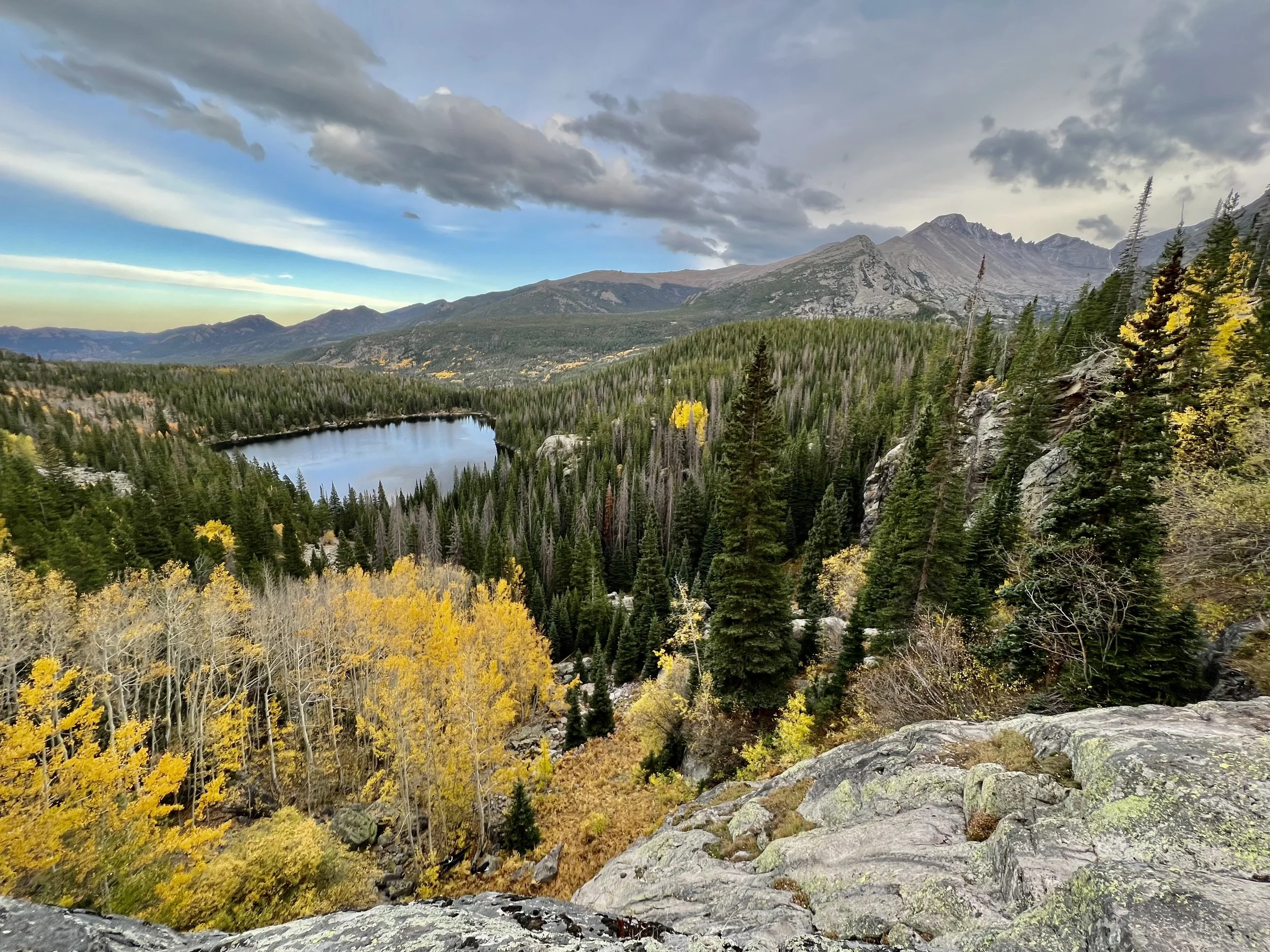
OUR FORESTS NEED FIRE OF ALL INTENSITIES.
[YES, THAT INCLUDES HIGH-SEVERITY FIRES]
Impacts on Wildfires
Wildfires in Colorado
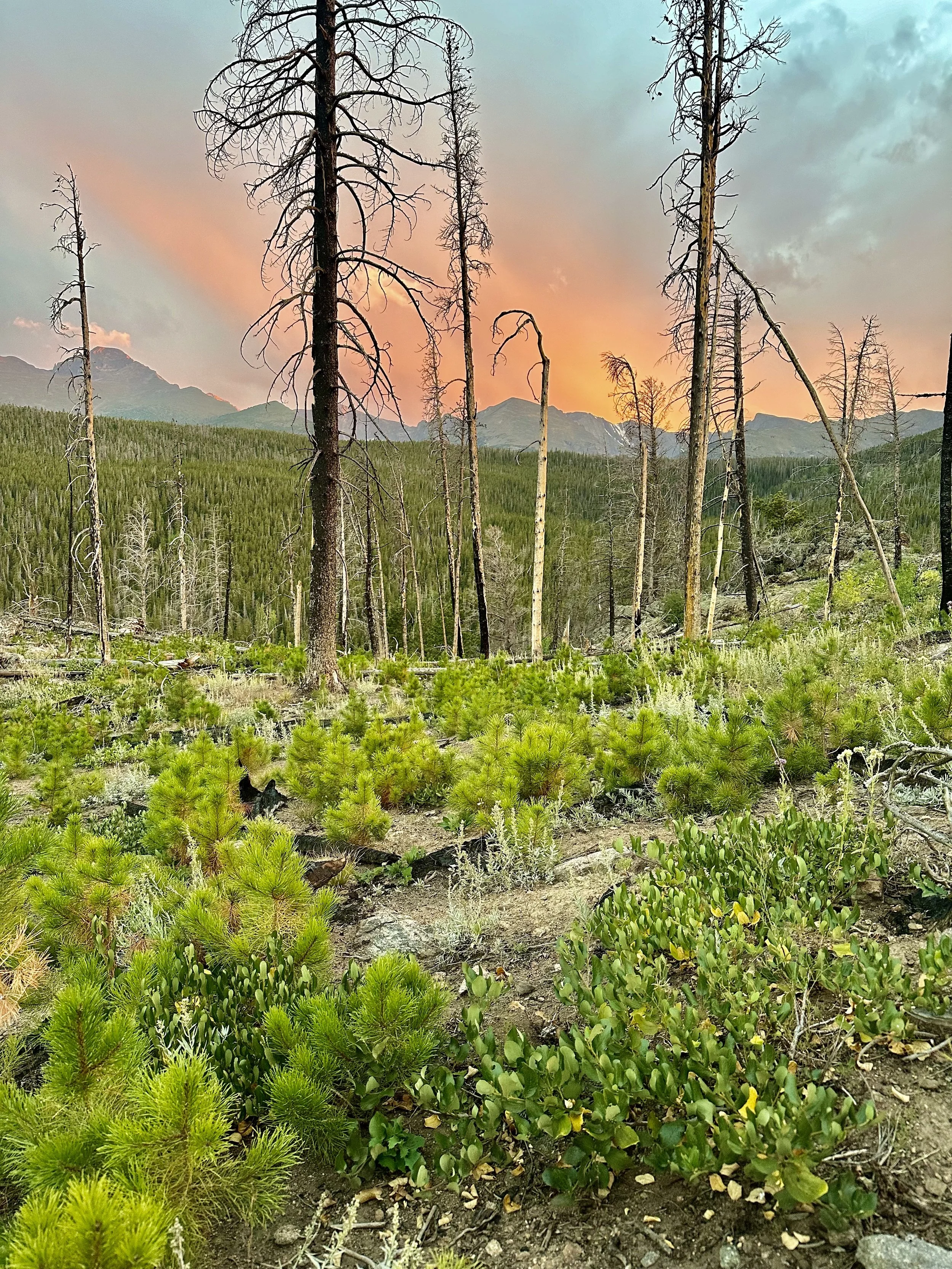
Wildfire, including mixed-severity wildfire (which includes high-severity, where the majority of trees die) is natural and essential across all Colorado’s forest types.
The vast majority of Colorado’s forests, including in the Front Range (estimated at 80 percent according to U.S. Forest Service), have not been impacted by under a century of fire suppression (only truly effective once post-World War II airplanes were used) as they lie in the upper montane or subalpine zones which experience fire return intervals of a century to several centuries.
Even for Colorado foothills lower montane ponderosa pine forests, 81 percent have grown densely and/or experienced high-severity wildfire prior to fire suppression, while ponderosa pine forests have experienced fire intervals up to 66 years. Therefore, with only 80 years of effective fire suppression, that’s only fourteen years of extra growth in lower montane forests.
Even if the argument was purely ecological—as if denser forests are “bad” and don’t make up for the forest deficit caused by centuries of development, logging, ranching, and mining—it shows little if any relation to increased risk of high-severity wildfire spreading to communities. Indeed, many studies show denser forests are less likely to burn and spread flames while “thinned” forests more likely to do so.
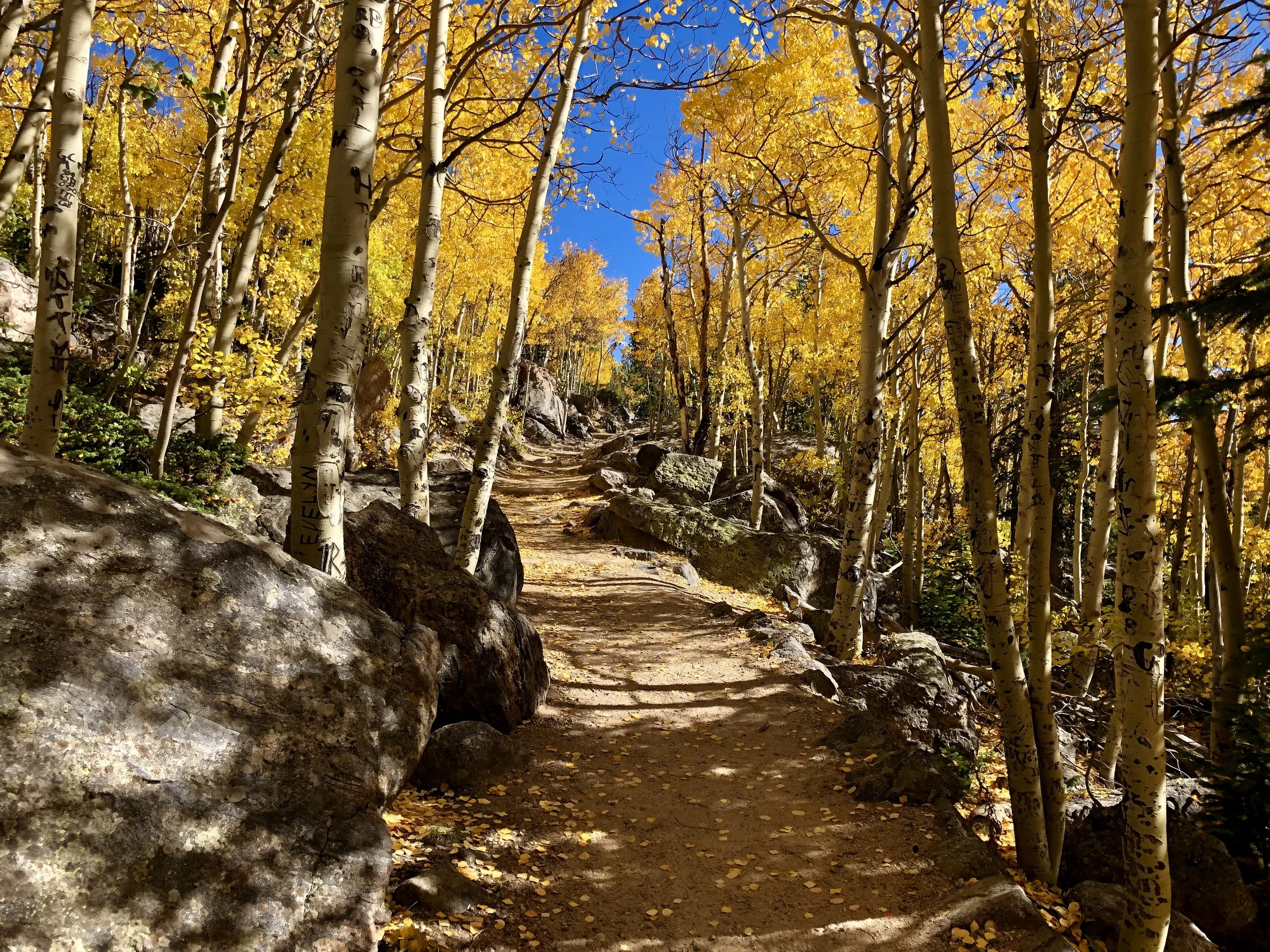
Indeed, the entire premise of logging to create “historical conditions” of parklike forests due to “overgrown” stands and “unusual” high-severity wildfire has been repeatedly debunked by numerous studies in peer-reviewed journals.
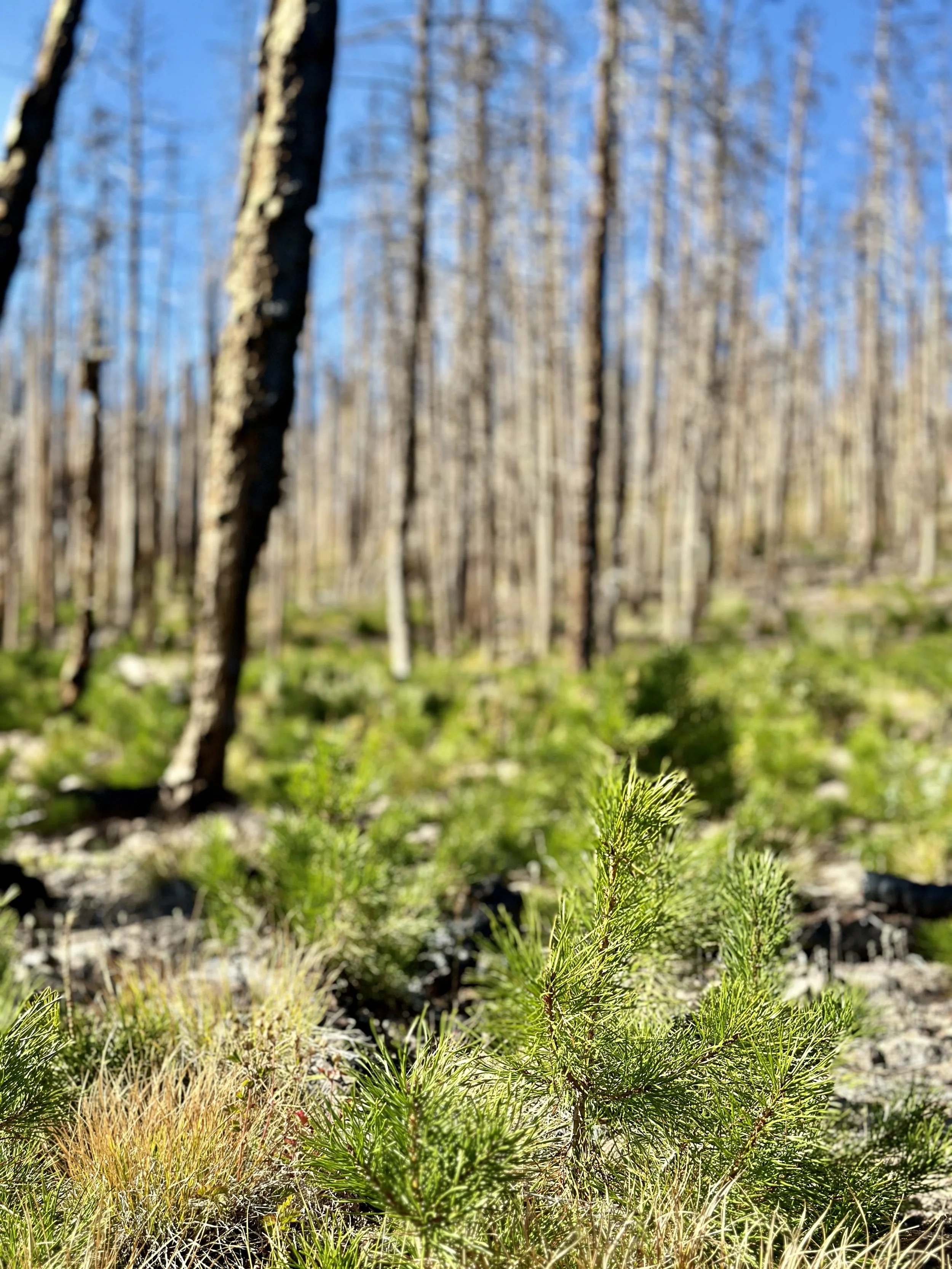
Even if logging could reduce high-severity burning—it can’t—doing so would be ignoring the fact that the majority of forests not only historically experience but ecologically require high-severity fire to create the forest structure necessary for wildlife.
As the U.S. Forest Service’s Tamm review meta-analysis states: “High-severity wildfire (i.e., when wildfire kills the majority of overstory trees) plays an important ecological role in forests, including promoting heterogeneity across landscapes and jumpstarting tree regeneration.”
Additionally, there is zero scientific evidence demonstrating that the current, routine, natural wave of mountain pine beetles is due to anything wrong with Colorado’s forest. While it appears true that beetles are more likely to survive milder winters, thus far, the latest wave of the native insects falls well within the historic pattern of every eight to twenty years.
The consensus of peer-reviewed science concludes either no uptick or even a DECREASE in the chance of fire across the landscape following a wave of mountain pine beetles (aside from a brief one to three-year window for individual trees as needles die and before they are shed).
Here’s the conclusion of a 2015 study co-authored by four of the world’s leading experts from CU Boulder, Sarah Hart, Tania Schoennagel, Thomas Veblen, and Teresa Chapman: “Contrary to the expectation that an MPB [mountain pine beetle] outbreak increases fire risk, spatial overlay analysis shows no effect of outbreaks on subsequent area burned during years of extreme burning across the West. These results refute the assumption that increased bark beetle activity has increased area burned.”
Even the US Forest Service—which carries out the federal timber sale program and routes billions in taxpayer dollars towards largely ineffective and often counterproductive “fuel reduction” logging—admits in its own 2018 study: “A spatial analysis of 466 fires (all but one less than an acre) from 1980 to 2005 did not find a relationship between MPB-caused [mountain pine beetle] mortality and subsequent fires. Kulakowski and Jarvis (2011) examined burned and unburned lodgepole pine stands and indicated that beetle-caused mortality did not increase fire probability. Observed fires were driven by climatic factors that foster dry conditions, which is consistent with previous studies.”
Studies also find “thinning” to be ineffective at stopping large waves of beetles, with such tree removal (before, during, or after) potentially prolonging insect activity and killing more trees than in unthinned stands that experienced beetles.
This 2014 study published in a peer-reviewed journal “found higher numbers of mature living trees remained in control stands of ponderosa pine than in thinned stands post-mountain pine beetle outbreak…once the beetles have run their course, more residual living trees (100) actually remain in the control plot than in the thinned plot (90) and, in fact, humans have contributed more to tree mortality than have the beetles.”