

DON’T LOCK UP AND WASTE OUR TAX DOLLARS.
[STOP SUBSIDIZING SCHEMES THAT DEGRADE OUR BEAUTIFUL STATE]
Impacts on Tax Dollars
Where are your tax dollars going?
Proposition 137, the deceptively-named “Direct Sporting Goods Sales Tax Revenue for Conservation,” if passed, would permanently change state sales tax refunds under Colorado’s Taxpayer Bill of Rights (TABOR) as currently enshrined in the Colorado State Constitution.
Specifically, the special interest-funded ballot measure would force the transfer of approximately $175 million per year out of a state budget already underwater by $1.5 billion to drastically expand government agencies and programs for controversial, experimental resource extraction—under dubious claims of “conservation”—with little to no oversight by citizens or our elected representatives.
Even supporters of Prop. 137 should understand that the measure would set a precedent for special interests to route taxpayer dollars away from TABOR refunds and/or the general fund for their own benefit, which may or may not be in the public interest.
Half of Prop. 137’s would go to already well-funded recreation programs with the other half—$83 million—financing land management experiments whose claims of “wildfire prevention” or “community protection” are either wholly debunked or seriously challenged by the consensus of peer-reviewed science.
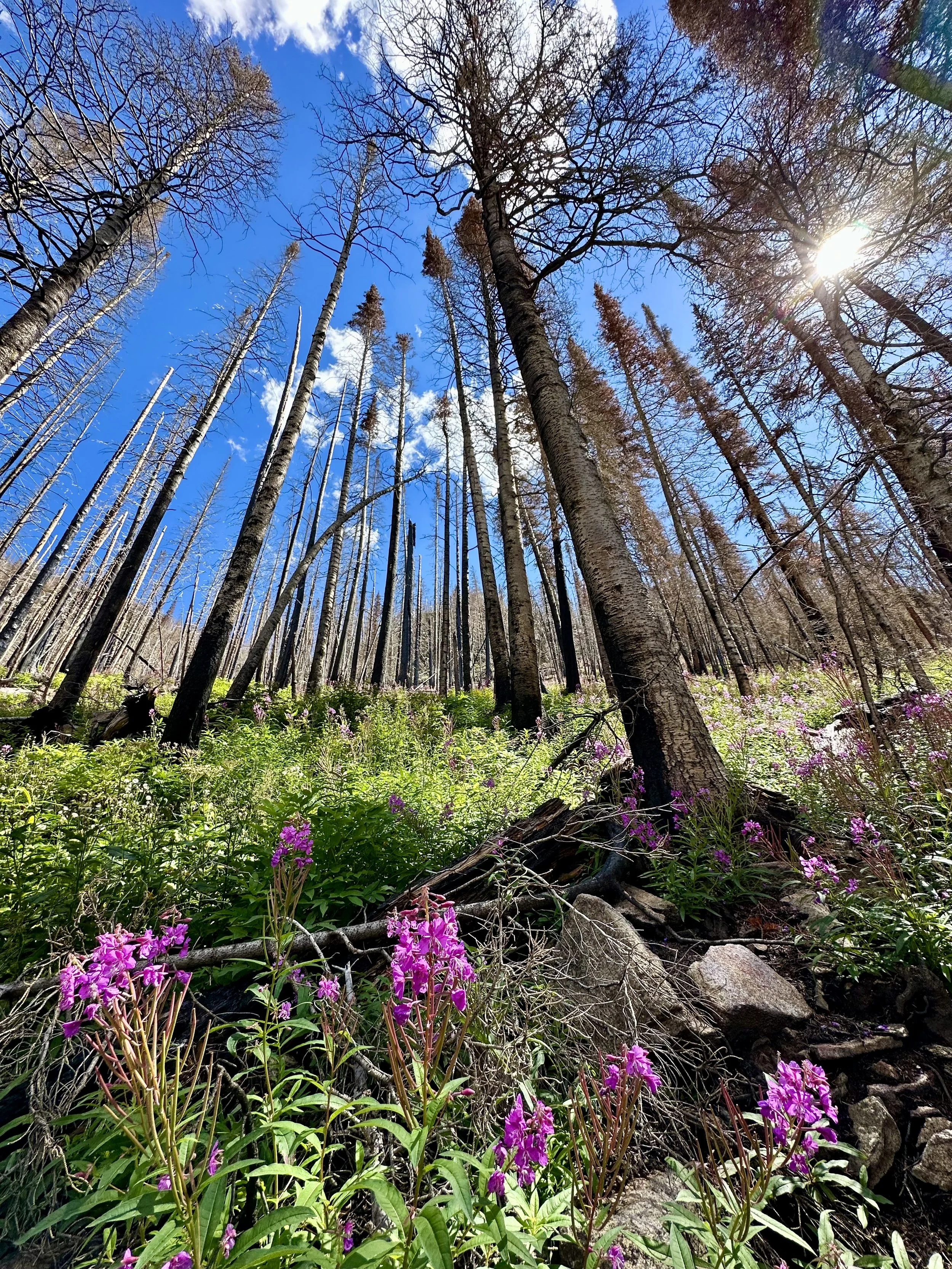
Incredibly, we taxpayers would be financing resource extraction in the form of sweetheart contracts to wealthy NGOs—including Prop. 137’s main sponsor, the controversial “working land” management The Nature Conservancy with its $1.8 billion budget and (often out-of-state) logging contractors.
Getting into the details, Prop. 137 would drastically alter TABOR state sales tax refunds on motor homes, travel trailers, campers, boats, motorcycles, motor scooters, bicycles, exercise equipment, and the rental of sports equipment and even musical instruments, to the tune of $175 million per year.
To do so, Prop. 137 would create a new state fund, the inaccurately-named “Conserve and Protect Colorado’s Water, Land, and Forests Fund,” by moving $83 million every year from the General Fund via TABOR-exempt “Wildfire and Conservation Revenue.” Ironically, this fund would neither “conserve” nor “protect” Colorado’s natural resources but extract them through scientifically-contested “fuel reduction” in the name of wildfire.
Prop. 137 would then route those tax dollars into several smaller funds making it extremely difficult to follow the money or track outcomes.


Yet “The Wildfire Mitigation Capacity Development Fund” is predicted to receive $18,400,000 from Prop 137, which finances “planning and implementation of fuel reduction and wildfire mitigation projects at landscape-scale.”
What’s more, under Prop 137, the “Prescribed Fire Claims Cash Fund” will get a one-time revenue of $10 million, a 4,000% increase from the fund’s current $250,000. The very existence of this fund acknowledges the extreme risks to homeowners and communities from 137 backers’ logging/burning “land management” agenda.
In 2022, a Forest Service post-logging prescribed burn triggered New Mexico’s most destructive wildfire, destroying nearly one thousand structures and at least 160 homes. In 2019, Prop. 137’s main sponsor, The Nature Conservancy, set a fire that got of hand, which “took dozens of firefighters and three days to put out,” according to media reports. In 2012, another Forest Service prescribed burn went wild in Jefferson County, Colorado, killing three people and damaging dozens of homes. That fire resulted in a temporary ban on the practice by current Senator and former Governor John Hickenlooper.
TABOR exists to protect the Colorado taxpayer from runaway government spending. Proposition 137 would shred Colorado’s constitution to siphon hundreds of millions of our tax dollars to controversial government agencies and unaccountable billion-dollar NGOs while handing over our state’s natural resources to special interests.

For instance, the “Forest Restoration and Wildfire Risk Mitigation Grant Program Cash Fund” and “Healthy Forests and Vibrant Communities Fund,” would take an additional $10,245,640 in taxpayer funding primarily for “fuels and forest health projects…to reduce risk of wildfire, promote forest health, and encourage the use of woody material for forest products,” to “Implement forest management and fuels reduction projects,” “Support utilization and marketing of wood products,” and to “Provide loans to forest products businesses.”
The consensus of peer-reviewed science reveals it is impossible for tree cutting in the forest to “prevent wildfire,” as 137 backers falsely claim. “Under adaptive management, fuel treatments are not designed to prevent or stop fires but to moderate fire behavior when fire inevitably returns,” this U.S. Forest Service funded study found. “However, there is a frequent misconception that fuel treatments should facilitate suppression and limit the size of wildfires.”
To the contrary, Forest Service studies find that forest “fuel reduction” not only can’t “moderate” the weather and wind-driven high intensity fires that threaten communities but actually increase wind penetration and spread of embers and flames to communities: “Reduced canopy bulk density can lead to increased surface wind speed and fuel heating, which allows for increased rates of fire spread in thinned forests.”